

Collapsible dish tub, dish basin and dish pan are three names for the same molded body. Buyers in camping use basin, buyers in household use tub or pan, and buyers in food preparation use prep tub. The product is identical; the search term is not, and that is what decides which page ranks.
Key takeaways
- Tub, basin and pan describe the same product. Use the term your channel searches and mention the others once in the body.
- Basin skews camping and RV. Tub skews household and utility. Pan skews kitchen washing.
- Capacity follows the term in most buyers' minds: pans are smaller, tubs are mid, basins are large.
- One product page can serve all three terms if the copy names them, but the title should carry the term with real volume.
Collapsible Dish Tub: Which Word Goes Where
| Term | Channel | Typical capacity |
|---|---|---|
| Dish basin | Camping, RV, outdoor | 8-16L |
| Dish tub | Household, utility, laundry | 8-16L |
| Dish pan | Kitchen washing, compact kitchens | 5-12L |
| Prep tub | BBQ, food preparation | 16-30L |
The practical rule for a supplier range is to use the term that matches the channel on the packaging, and to mention the alternatives once in the product description. That single mention picks up buyers who search a different word for the same thing.
Why Capacity Follows the Term
Buyers expect a dish pan to be compact because it replaces a washing-up bowl, and they expect a basin to be large because it is used for more than dishes. A product named pan at 30L, or named basin at 5L, reads as wrong even when the molded body is fine.
That is the reason to keep one name per size in a range: an 8L basin, a 16L basin and a 30L prep tub. It reads as a product family rather than as a list.
Shared Features Across All Three
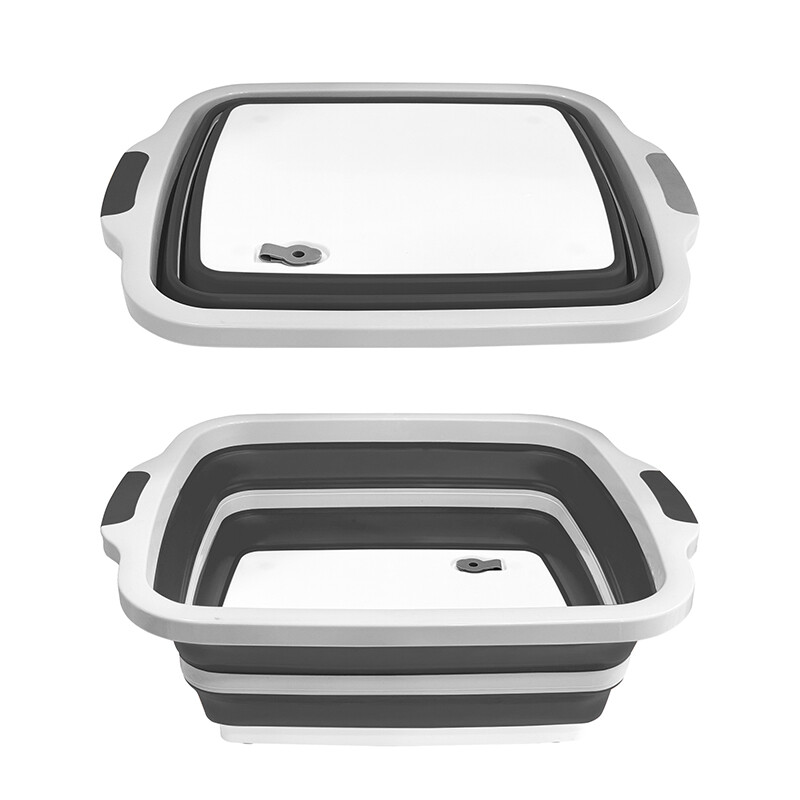
Whichever term you sell under, four features decide reviews: a drain plug, a folding handle, a band that survives repeated folding, and a folded height under 3 cm. Those four appear in every channel and are worth putting on the packaging.
The differences are accessories rather than the body: a lid for transport, a cutting board for preparation, a colander for draining. That is how one product reaches camping, household and BBQ buyers without three sets of tooling.
Naming and Search
For a product page title, use one term with volume and put the others in the description. A title that stacks all four terms reads as keyword stuffing and converts poorly.
The exception is a category page, where a broader heading such as "collapsible basins and tubs" is appropriate, because it is grouping products rather than describing one.
Ordering Notes
A first order of the body runs 500 to 1,000 pieces per SKU, with samples in three to five days and bulk production in 15 to 20 days. Colors, lids and printed packaging are separate.
If you are building a range, keep one body and vary the accessories rather than the tool. Three sizes and three accessory sets give nine marketable SKUs from three molds.
FAQ
Are a dish tub and a dish basin the same thing?
Structurally yes. The names come from different channels.
Which term has the most search volume?
It depends on the market. Basin skews outdoor, tub and pan skew household.
Should the packaging use one word or several?
One primary name, with the alternatives in the product description.
Can one body serve all channels?
Yes. Only the accessory set changes.
A collapsible dish pan and a tub are the same body, so one range can cover both terms without a second tool.
Bottom line
Pick the term your channel uses, keep one name per capacity, and vary accessories rather than tooling. That keeps the range simple and searchable.
A collapsible dish tub, basin or pan is the same body, so the copy should name the alternatives even when the title carries only one.
Our 8L, 16L and 30L collapsible basins cover the sizes, and the wholesale buying guide explains how the terms map to channels. For the food preparation version of the same body, the prep tub comparison sets out the accessory differences.