

Learning how to wash dishes while camping comes down to two basins and one rule about where the water goes. Use one basin for washing and a second for rinsing, keep the wash water hot but shallow, and empty both into a container or a designated drain rather than onto the ground. Done that way, a family of four can clean a full meal in roughly 8 to 12 liters.
Key takeaways
- Two basins beat one. Washing and rinsing in the same water leaves a film on everything, which is the most common complaint about camp washing up.
- Shallow and hot uses less water than deep and warm. A washing depth of 4 to 5 cm cleans better than a half-filled basin.
- Water use scales with the number of people, not the number of plates. Plan 3 to 4 liters per person for a full meal with cookware.
- gray water is the part most likely to get a camper in trouble at a site. A basin with a drain plug makes emptying into a proper container a one-person job.
The method below is the short version of how to wash dishes while camping without carrying extra equipment: two folding basins, a scraper and a spare container.
How to Wash Dishes While Camping: The Two-Basin Method
Set up in this order and the job takes about fifteen minutes for a family meal.
- Scrape every plate into the rubbish or the fire ring before it touches water. Food residue is what turns wash water gray in thirty seconds.
- Fill the first basin to a washing depth of about 4 to 5 cm with the hottest water you can handle, plus a small amount of biodegradable soap.
- Wash the cleanest items first, glasses and cutlery, and finish with the greasiest pans. Order matters more than scrubbing.
- Move each item to the second basin, filled with clean water, and rinse.
- Drain both basins into a container, a dish drain or a designated gray water point, then dry and fold.
The order in step 3 is what separates a fast wash from a long one. Washing a greasy pan first contaminates the water for everything that follows.
How Much Water It Takes
| Group size | Wash basin | Rinse basin | Total for a full meal |
|---|---|---|---|
| 1-2 people | 3-4 L | 2-3 L | 5-7 L |
| 3-4 people | 5-6 L | 3-4 L | 8-12 L |
| 5+ people | 7-8 L | 4-5 L | 12-16 L |
The numbers above assume a washing depth rather than a full basin, which is why an 8L basin covers two people and a 16L covers a family. Filling either basin to the rim roughly doubles the water used without cleaning any better.
Soap and gray Water
Use a biodegradable camp soap, and use less of it than you would at home. Most of what the second basin is doing is removing soap residue, so over-soaping the wash water simply increases the amount of clean water you need.
gray water rules vary by site and by region. Many campsites and most public land areas require wash water to be carried out or emptied into a designated drain rather than poured on the ground, because food particles and soap attract wildlife. The practical answer is a basin with a drain plug and a spare container to empty it into. That is the point of the plug: it lets one person empty a full basin without lifting and tipping it.
Setting Up the Station
The physical setup matters as much as the method:
- Put both basins on a flat, stable surface at a comfortable height, not on the ground where the user has to bend
- Keep the wash basin on the left and the rinse on the right, or the reverse, and keep the order consistent so the process becomes automatic
- Keep a small scraper and a cloth next to the wash basin; scraping before washing is the step people skip
- Leave a container for gray water within reach so nothing has to be carried across the site
Cleaning Up and Packing Out
Fold the basins only after they are dry. A folding band stored wet is what produces the smell that campers complain about in reviews, and it takes one extra minute to avoid.
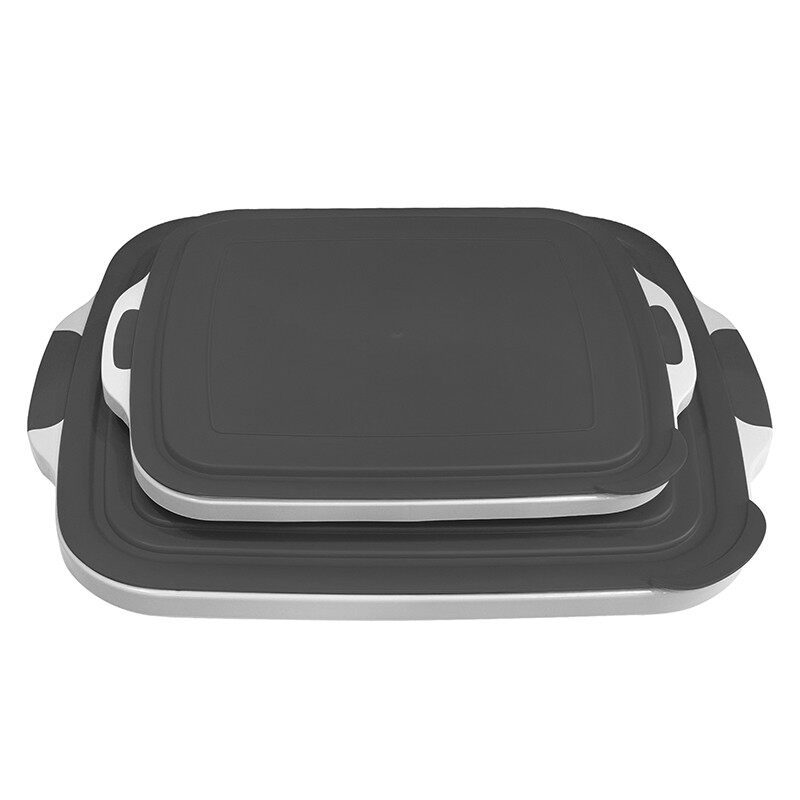
Wipe the fold crease with the cloth before folding, shake out the rinse basin, and store the two basins nested rather than separate. Nested storage is the reason the two-basin setup takes up roughly the space of one rigid tub in a packed vehicle.
Gear That Makes It Faster
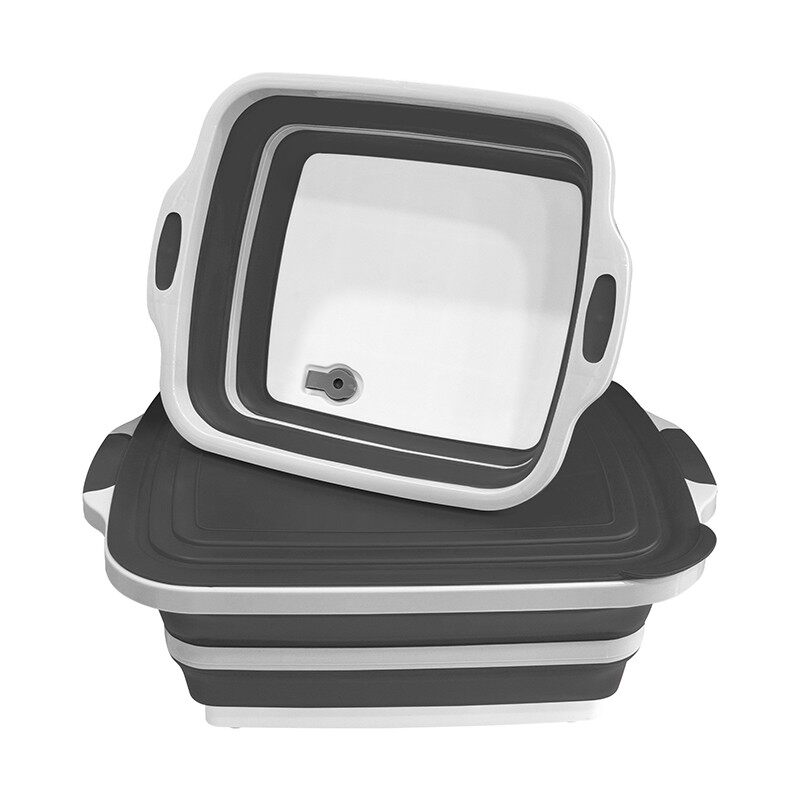
Three items take the most time out of camp washing up: a basin wide enough to lay a pan flat, a drain plug so emptying is a one-person job, and a second basin for rinsing. A folding handle matters if the basins have to be carried full to a drain.
A colander insert or a cutting board that seats on the rim turns the wash basin into a preparation surface, which is useful when the same table is being used to cook and clean. That combination is what most camp kitchen sets are built around.
That is the whole answer to how to wash dishes while camping: the gear list stays short, and the method does the work.
FAQ
Can I wash dishes with cold water?
It works with a good scraper and detergent, but hot water cleans in less time and less volume.
Do I need special soap?
Use biodegradable camp soap, and use it sparingly. The rinse basin is doing the work.
What size basin for two people?
8L. For a family of four, 16L, and preferably two of them.
Where should the water go?
Into a container and then a designated drain or gray water point. Check the rules of the site before you pour anything out.
A camp dish washing station is really two basins plus a container, which is why the pair outsells the single unit after one trip.
Bottom line
Two basins, a shallow hot wash, a clean rinse, and gray water carried out. That is the whole method, and it works with any basin that folds flat and drains properly.
Our 16L collapsible basin is sized for a family wash station, and the 8L, 16L and 30L range lets you sell the two-basin setup as a pair. For the storage side of the same decision, the camping sink guide covers size, folded height and drain plug position.