

Ice cube mold shapes decide how fast ice melts, and melt rate decides which drink a mold belongs with. A 5 cm cube holds its form through a slow whisky pour; a 1 cm mini cube chills an iced coffee in minutes and then disappears. Buyers who match shape to channel reorder more often than buyers who stock ice cube mold shapes at random.
Key takeaways
- Bigger and rounder means slower. A large cube or a sphere lasts far longer in a glass than the same volume of mini cubes, because there is less surface area for the melt.
- Whiskey and spirits pull large cubes and spheres. Iced coffee pulls mini sheets. Insulated tumblers pull cylinders. Camping pulls multi-layer and rotating formats.
- Cavity size drives retail price more than cavity count. Four large cavities and 128 mini cavities cost similar amounts to make and sell at opposite ends of the shelf.
- Deep and round shapes are difficult in rigid plastic and belong on the mold side of your range.
Why Ice Cube Mold Shapes Matter More Than Size
Ice melts from its surface. Two cubes of the same weight melt at very different speeds if one is flat and one is round, because the round one exposes less surface area to the drink and to the air. In a normal room-temperature glass, a 2.5 cm cube is gone in well under an hour, while a 5 cm block can hold for two to three hours. A sphere of similar weight sits between the two, weighted toward the slow end.
For a supplier range the practical result is simple: sell the shape that matches how long the customer wants the drink to stay cold.
Keep that rule in front of you when you review ice cube mold shapes for a range: pick the melt behavior the drink needs, then work back to the cavity.
Whiskey and Spirits: Large Cube and Sphere
| Shape | Cube size | Cavity count | Melt behavior | Typical retail band |
|---|---|---|---|---|
| Large cube | 4-5 cm | 4-6 | Slow, holds shape | 12-25 USD |
| Sphere | 4-6 cm ball | 4-6 | Slowest of the three | 12-28 USD |
| Large cube with lid | 4-5 cm | 4-6 | Slow, stackable | 15-30 USD |
Barware and gifting buyers order this group. A sphere needs a two-part cavity or a flexible body, so it sits firmly in silicone rather than rigid plastic. If a retailer is building a whisky set, the mold is usually the piece that carries the brand mark, which is why the lid and the packaging matter as much as the cavity.
Coffee and Cold Brew: Mini Sheets
Mini cavities around 1 cm chill a drink fast and dilute it slowly enough for cold brew. The reason the 128-cavity sheet sells so well into cafes is throughput: one sheet fills a batch, and the sheet itself is what gets reordered, not the drink.
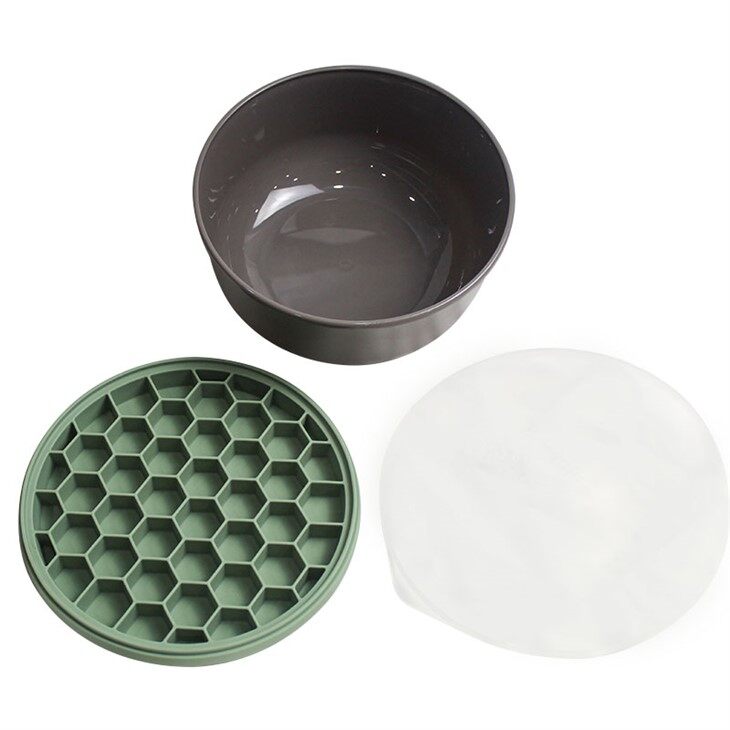
Coffee buyers usually ask for two things beyond size: a lid, so the sheet can stack in a small under-counter freezer, and a cavity wall thin enough to release without flexing the whole sheet. Freezing coffee, milk or tea directly in the cavities is normal use, so the material documentation has to cover those liquids, not just water.
A mini sheet also opens the food-preparation channel: purees, stock and herb or oil portions freeze in the same cavities, which gives a distributor a second customer type for the same SKU.
Tumblers and Bottles: Cylinders
Insulated bottles and 40 oz tumblers need a cylinder tall enough to stand inside the drink, not a cube that floats at the neck. Cylinder molds are usually ordered in two or three lengths so one mold set fits 20 oz, 30 oz and 40 oz bottles.
This is the shape with the most direct accessory demand, because the drinkware it fits is already being sold. A retailer that sells bottles can carry the cylinder mold next to them, and the customer needs no explanation of what the product is for.
Camping, Coolers and Bulk Use
Two formats matter outside the kitchen:
- Multi-layer ice grid sets. Several sheets stacked in one frame, for filling a cooler in one pass.
- Rotating ice boxes. A drum that releases cubes as it turns, aimed at coolers and food service rather than a single glass.
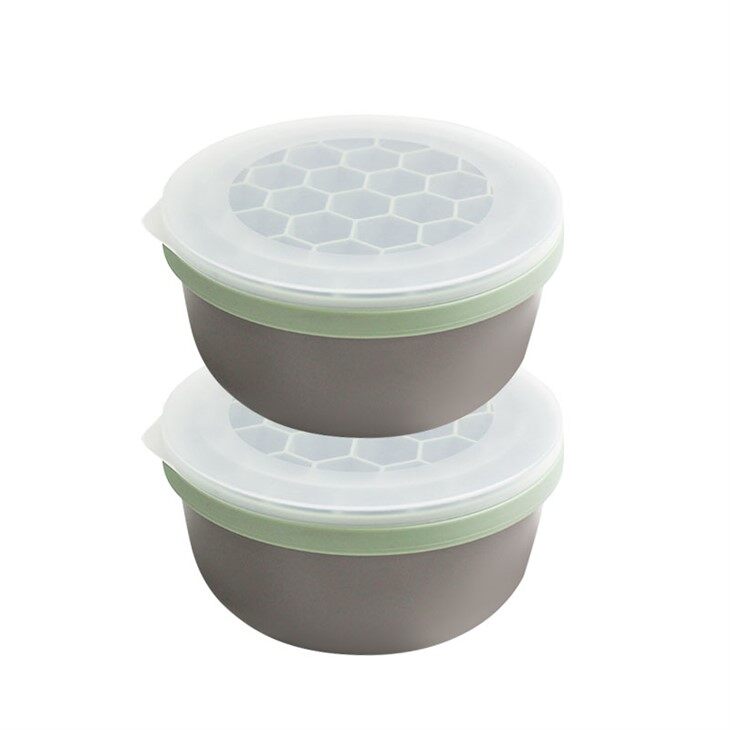
A freeze-and-preserve cup sits in the same family: a container that freezes and stores in one body, which suits camping and lunch bags where a separate tray is one more thing to pack.
Matching Shape to Channel
| Channel | Shape to lead with | Why |
|---|---|---|
| Barware and gifting | Large cube, sphere | Slow melt, brand mark on the mold |
| Coffee shops and cafes | 1 cm mini sheet | Throughput, fast chilling |
| Drinkware retailers | Cylinder | Sells next to bottles and tumblers |
| Outdoor and camping | Multi-layer, rotating box | Fills a cooler in one pass |
| Baby and food prep | Mini sheet with lid | Portion control, freezer storage |
Most distributors end up with three of those five rows, not all five. The two that repeat fastest are the mini sheet and the large cube, which is why they are the sensible first order.
Tooling Notes for Unusual Shapes
Simple cubes need the least tooling. Spheres, cylinders and anything with a narrow neck need either a two-part cavity or a flexible body that can be peeled away from the ice. Anything with a logo or a letterform inside the cavity needs a cavity that releases without tearing the shape.
When you brief a new shape, send the cavity size, the wall thickness you want and a sketch or reference photo. The wall thickness is the specification buyers forget, and it is the one that decides whether the mold releases easily or fights the user every time.
FAQ
Which shape melts slowest?
A sphere of a given weight, followed by a large cube. Mini cubes melt fastest.
Can one mold make two shapes?
Yes. Mixed sheets with two cavity profiles in one body are common for retail multipacks and first-time buyers.
Are spheres possible in rigid plastic?
Usually not without a two-part body, which raises tooling and unit cost.
How many shapes should a first order cover?
Three, one from the spirits row, one mini sheet and one cylinder if you sell drinkware. Those three ice cube mold shapes cover the barware, coffee and drinkware channels without overloading a first order.
An ice ball mold sits in the same family and follows the same cavity logic, which is why the two shapes are usually quoted together.
Bottom line
Pick the shape from the drink, and the channel follows. Large cubes and spheres for spirits, mini sheets for coffee, cylinders for bottles, multi-layer and rotating formats for coolers.
Our round ice cube tray molds cover spheres and round cavities, the silicone large ice cube tray covers 5 cm blocks, and the mini ice cube tray is the sheet most coffee buyers reorder. If you are still choosing between a flexible mold and a rigid tray for one of these shapes, the mold vs tray comparison covers the tooling trade-off.