

An ice cube tray for water bottles exists because a cube cannot get past the neck. Narrow bottles need a slim stick, usually 1.5 cm to 2.5 cm across, and the cavity has to hold that shape while it freezes, or the stick bends and stops fitting.
Key takeaways
- Diameter is the specification, not length. Measure the bottle bore before choosing a stick size.
- Standard sizes are 1.5 cm, 2 cm and 2.5 cm across, at 8 cm to 12 cm long.
- Support is the design problem. A flexible cavity without a frame produces bent sticks and returns.
- This is a drinkware accessory, so sell it beside bottles, not beside kitchen tools.
Ice Cube Tray for Water Bottles: Stick Sizes That Fit
| Bottle bore | Stick diameter | Stick length | Notes |
|---|---|---|---|
| Under 2 cm | 1.5 cm | 8-10 cm | Sports bottles, kids' bottles |
| 2-3 cm | 2 cm | 10-12 cm | Most reusable bottles |
| 3 cm and up | 2.5 cm | 10-12 cm | Wide-mouth bottles, flasks |
Quote one diameter per customer segment and keep the length within a single range. A set that tries to cover every bottle ends up fitting none of them squarely.
The Frame Is the Product
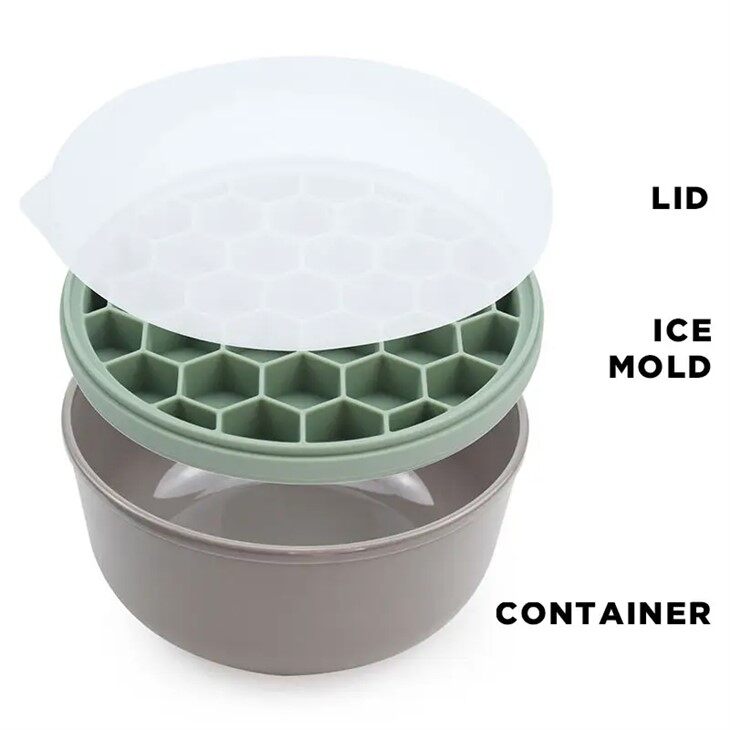
A flexible silicone mold full of 10 cm sticks is unstable: the cavities lean, the sticks freeze at an angle, and the customer finds out when they try to insert one. The design answer is a rigid frame or a lid that holds every cavity upright.
That rigid part is the difference between a product that works and one that generates reviews about bent ice. When you quote a stick tray, quote the frame with it, and put the frame material on the specification sheet.
Cavity Count and Freezer Space
Stick trays are long, so they take up more linear freezer space than a cube sheet. Cavity counts of four to six per frame are typical, and buyers usually order two frames rather than one large one so the tray can be split between shelves.
Ask for the sheet dimensions before you approve a design. A 12 cm stick with a rim can push the overall sheet past the depth of a standard freezer drawer, and that is a complaint that shows up immediately.
Materials and Use
Food-grade silicone for the sticks and food-grade PP for the support frame. Because the product goes into a bottle that is used all day, buyers ask about odor and taste as much as about material safety: the documentation should cover both the material and the wash cycle.
Rated temperature belongs on the packaging. Stick ice is usually left in the freezer for hours, so the cold end of the range is the one that matters most, and a product that cracks at -20°C will fail in normal use.
Ordering Notes
Stick profiles start at 500 to 1,000 pieces per SKU, with a three to five day sample and a 15 to 20 day bulk run. Custom diameters and branded packaging come as separate lines.
The sample check for this product is simple: freeze a full frame, release the sticks, and try inserting one into the bottle the customer will use. If the stick bends on the way out of the cavity, the frame or the wall thickness needs changing before production.
FAQ
What size fits most reusable bottles?
A 2 cm diameter stick, 10 to 12 cm long.
Can sticks be made in a rigid tray?
Rarely. A 10 cm cavity in rigid plastic grips too hard to release.
Why do sticks come out bent?
The cavity was frozen without support. A rigid frame or lid solves it.
Is stick ice better than a cube for a flask?
It fits the opening, which is the whole point.
An ice stick tray is the name most buyers use for the slim version, so it belongs in the title of any listing aimed at narrow bottles.
Bottom line
Quote a slim diameter, one length range and a rigid support frame, and check the fit on a frozen sample rather than on a drawing. Those three items are the product.
Our round and cylinder mold range covers slim cavity formats, and the Stanley cup fit guide covers the wider tumbler versions of the same product. If you sell bottles as well as molds, the ice bucket format is the storage partner for this range.
An ice cube tray for water bottles lives or dies on that diameter, so measure the bottle before the mold.