

A collapsible basin for baby bottles is a certification sale. Parents and retailers buy on documented food contact, not on capacity, and a supplier who cannot produce the report for the exact material loses the order regardless of price. The rest of the specification is straightforward.
Key takeaways
- Food-contact documentation per material is the buying decision. One general certificate is not enough.
- 8L is the practical size. Bottles are long, so the basin needs depth more than width.
- A base drain plug makes emptying sterilising water easy; a lid keeps the basin clean between uses.
- Claim language matters. Keep it factual and check the requirements of the destination market.
What Buyers Actually Check
Three documents come up in almost every enquiry: the food-contact report covering the material used, the working temperature range, and the material composition statement for the flexible band as well as the rigid walls.
If the product is marketed for infant feeding equipment, additional requirements may apply depending on the market. Confirm the destination and the applicable standard before printing any claim, and keep the wording on the packaging factual rather than absolute.
Collapsible Basin for Baby Bottles: Size and Depth
| Specification | Recommendation | Reason |
|---|---|---|
| Capacity | 8L | Fits 4-6 bottles with accessories |
| Depth | 15 cm or more | Bottles need to stand |
| Base | Flat, wide | Stability while handling |
| Drain | Base corner plug | Easier emptying |
Bottles are tall, so depth matters more than floor area. A wide shallow basin holds water but the bottles lean against each other, which is the complaint that appears in reviews.
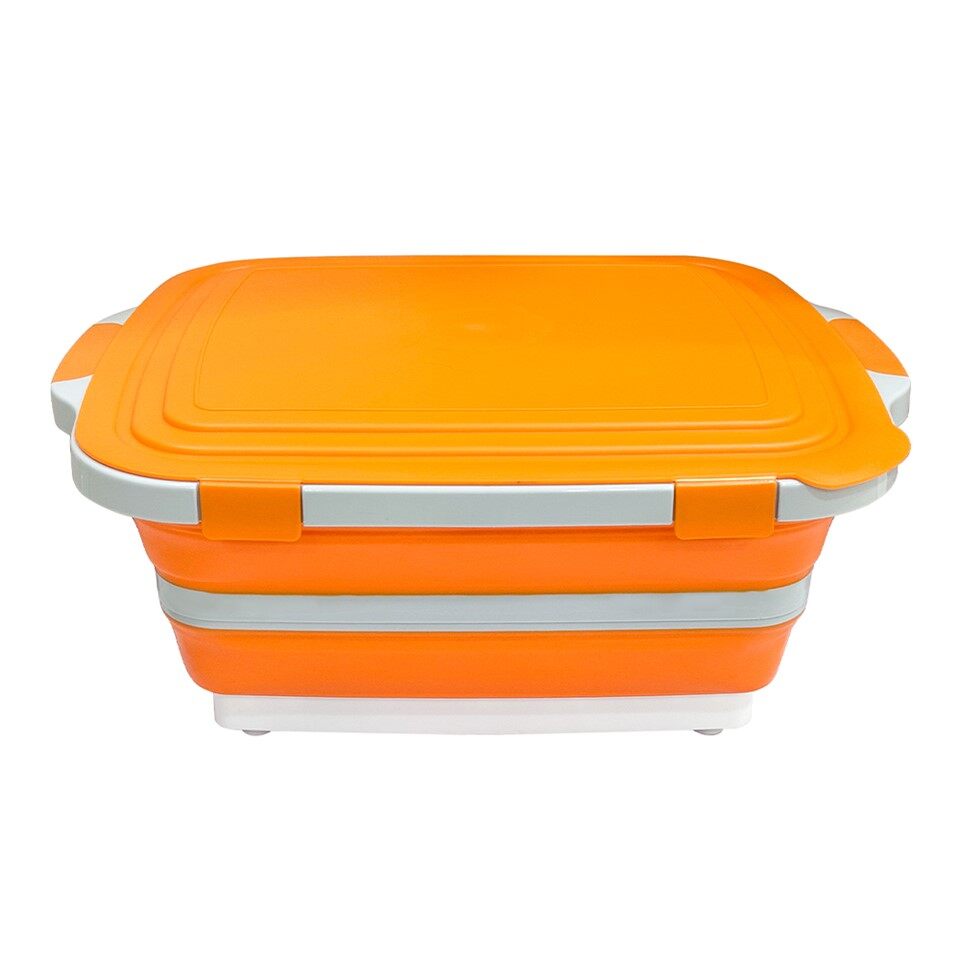
Materials and Temperature
Food-grade PP for the walls and TPR for the folding band is the standard combination. Both need to be covered by the temperature range, and the range should comfortably exceed the temperature of the water used for sterilising or for a hot rinse.
That is the specification buyers trip over: a basin rated for cold use being sold for hot water. Confirm the top of the range before making any claim about hot water.
Drain, Lid and Hygiene
A base-corner drain plug makes emptying a full basin a one-person job, which matters when a parent is holding a child. A lid keeps dust off the basin between uses and lets it store closed, which is a hygiene feature in this channel rather than a storage feature.
The folding crease is the hygiene weak point, so the care instruction should tell users to open the basin fully to wash it and to dry it open. A basin stored folded and wet produces smell complaints, and they are avoidable with one line of instructions.
Ordering Notes
Formats start at 500 to 1,000 pieces per SKU, with a three to five day sample and a 15 to 20 day bulk run. Colors and printed packaging are quoted separately.
Ask for the documentation set with the sample rather than after the order. If a buyer is choosing between two suppliers at similar prices, the supplier who sends the reports first usually wins the order.
FAQ
Is a normal basin safe for bottles?
Only if the material documentation covers food contact and the rated temperature covers hot water.
What size fits bottles best?
8L, with a depth of at least 15 cm.
Is a lid necessary?
For hygiene between uses, yes.
Does the basin need a drain plug?
It makes emptying sterilising water much easier.
When a buyer asks for a food grade basin certificate, the report has to cover every food-contact part rather than just the walls.
Bottom line
Lead with documentation, size the basin for standing bottles, and add a drain and a lid. Those three answer everything a buyer asks in this channel.
Our 8L basin format covers the size, and the BPA-free claim guide explains what the material wording should and should not say. For food preparation use of the same body, see the vegetable washing guide.
A collapsible basin for baby bottles is bought on documentation and depth, so quote both before the price.