

A vegetable washing basin is bought on width, not depth. Leafy greens and long produce need a basin wide enough to submerge in one layer, and a drain that lets soil settle and water out without lifting the whole basin.
Key takeaways
- Width and length matter more than depth for vegetables. A deep narrow basin is a bottle washer, not a produce washer.
- 16L is the standard size for a household produce basin; 30L suits markets and catering.
- A colander insert or a basket that lifts out is the accessory that sells this product.
- Drain position should be low and to one side so soil settles away from the outlet.
Vegetable Washing Basin: Width and Depth
| Produce | Basin need | Note |
|---|---|---|
| Leafy greens | Wide, shallow | One layer, submerged |
| Root vegetables | Wide, medium depth | Room for grit to settle |
| Herbs | Shallow, gentle | Water movement alone is enough |
| Large produce | Deep | Whole heads and long items |
A 16L basin with a wide floor covers most household use. Going deeper without going wider does not help vegetables, which is a common specification mistake in this category.
Drain Position and Soil Settling
The reason a plug matters here is grit. Soil settles to the bottom, and the user wants to drain the water without redistributing it over the produce. A plug at the base corner lets the water leave from one point while the basin stays still.
A center plug disturbs settled soil as it drains, which is the practical argument for a corner position in this category even though a center plug is cheaper to mold.
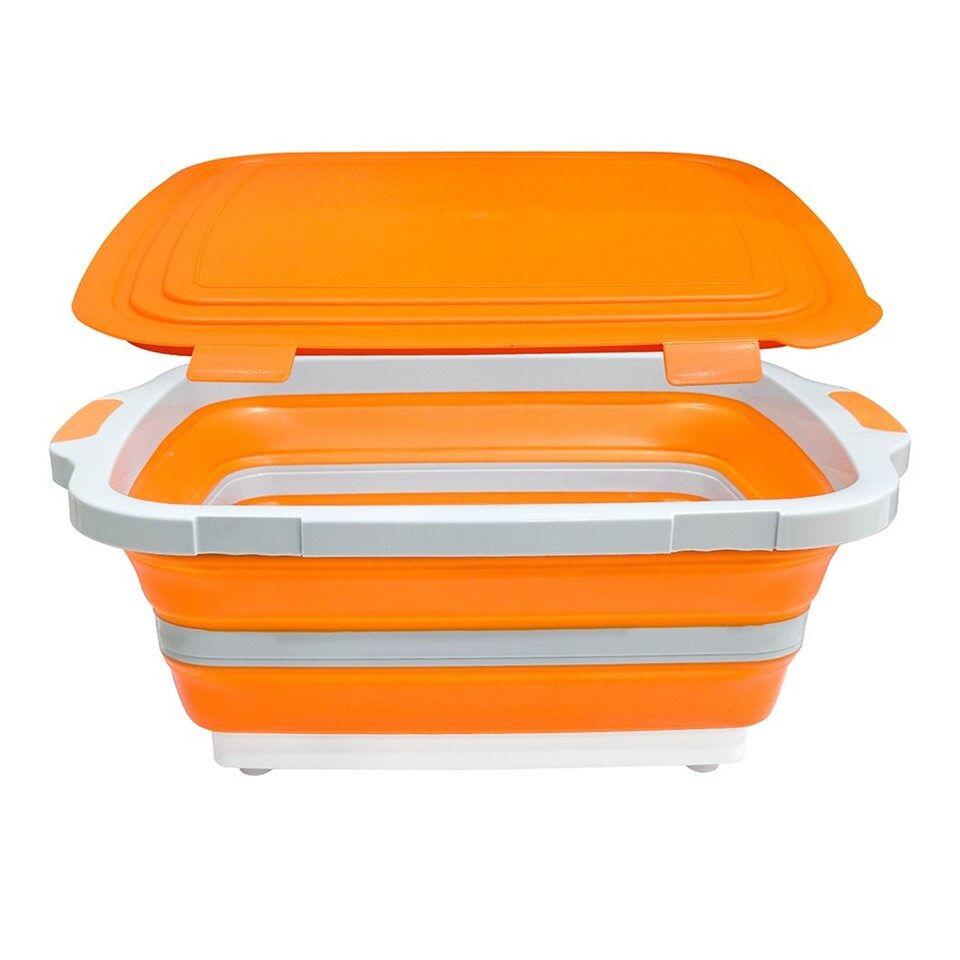
Colanders, Inserts and Combination Sets
The accessory that lifts this product above a plain tub is a colander or a basket insert that rests on the rim. The user washes in the basin, lifts the insert out and lets the produce drain, which is a one-step improvement over scooping produce out by hand.
A cutting board that seats on the rim turns the same basin into a preparation station, which is why the combination format sells into the BBQ and outdoor cooking channels as well as the kitchen.
Materials and Contact with Food
Food-grade PP for the walls, TPR for the folding band, and food-contact documentation for both. Because the product holds raw produce that will be eaten, buyers will ask for the report on the material batch rather than a general statement.
The temperature range matters less here than for a bottle basin, but it should still be stated, because users rinse produce under warm water and sometimes use the basin for blanching preparation.
Ordering Notes
A first order runs 500 to 1,000 pieces per SKU. Samples take three to five days and bulk takes 15 to 20 days, with colander inserts, cutting boards and colors quoted as separate items.
If you are building a food-preparation range, quote the basin, the insert and the board as one set as well as individually. Buyers usually order the set once they have seen it assembled.
One practical note for the sample round: send the insert with the basin, because the fit between insert rim and basin wall is what buyers check first and what they cannot judge from a photograph.
FAQ
What size for household vegetable washing?
16L, wide rather than deep.
Is a colander insert worth adding?
Yes. It is the accessory that defines the product.
Which drain position is best?
Base corner, so settled soil is not disturbed.
Can it be used for meat preparation?
Yes, within the documented temperature range and with a proper wash afterwards.
A collapsible basin sold for produce is the same body as a general wash tub, which is why the two terms get used together.
Bottom line
Quote a wide 16L basin, a corner drain and a lifting insert. That combination covers vegetables, herbs and preparation, and it is what the food channel orders.
Our 16L basin and 8L, 16L and 30L range cover the sizes, and the prep tub comparison covers the accessory sets for food preparation. For the baby bottle version of the same body, see the certification guide.
A vegetable washing basin is sized by width rather than depth, so quote the floor area on the specification sheet.