

For a supplier range, the difference between an ice cube mold and an ice cube tray is not the name on the box. It is the material and the way ice comes out. A tray is usually rigid plastic that you twist to crack the cubes loose. A mold is flexible silicone or TPR that you push from the back, one cube at a time, without bending anything.
That single difference decides what your customers can sell. Trays carry the opening price point. Molds carry shapes, branding and gift packaging, which is where the margin sits. Most importers end up stocking both, but not at the same depth, and not for the same buyer.
Key takeaways
- Silicone molds release by pushing; rigid trays release by twisting. Molds handle deep cavities and complex shapes, trays do not.
- The word "mold" attracts custom buyers. Someone searching for an ice cube mold is usually looking for a shape, a cavity count or a private-label product, not the cheapest tray on the shelf.
- Trays still win the volume business. If you need a 2-3 dollar retail item for a supermarket planogram, a rigid tray at a low unit cost is the right answer.
- Pair them. A range with trays for volume and molds for margin sells better than either one alone.
Ice Cube Mold vs Ice Cube Tray: The Difference Buyers Feel
Push a cube out of a silicone mold and the cavity stays intact. Twist a rigid tray and the plastic flexes, which works fine for a 2 cm square cube and poorly for anything deep: a 5 cm whiskey cube, a sphere, or a shape with a narrow neck. Rigid trays in those formats either crack over time or need a two-part body, which raises the mold cost and the unit price.
Silicone also survives the temperature swing better. A freezer at -18°C, a dishwasher at the top rack and a rinse under warm water are all normal use for a silicone mold. Cheap rigid plastic tends to cloud and craze after a few dozen cycles, and that is the number one complaint in retail reviews.
The trade-off is handling. Molds are floppy, so they need a lid or a tray frame to stack in a freezer. Some buyers add a rigid outer shell; others accept a lower stacking density. That decision shows up in your packaging and your carton volume, so settle it before you print anything.

Why the Word "Mold" Changes Your Customer
The two words pull different traffic, and that is worth planning for.
People searching for an ice cube tray are usually replacing something in a kitchen. People searching for an ice cube mold are usually specifying something: a 5 cm cube for a whisky set, a sphere for a cocktail kit, a 128-cavity sheet for a coffee bar, a custom shape for a branded gift box. That second group asks different questions, orders in different quantities, and accepts a different price.
If your product pages only use the word tray, you are invisible to that second group. The fix is not to rename everything. Keep the tray language for the volume SKUs, and use mold language on the deep-cavity, flexible, custom-capable products where the term is accurate.
The spelling splits too. American buyers write mold, British and much of the EU market write mould. A single mention of the alternative spelling in the body text is enough to catch both.
Side-by-Side: Mold and Tray
| What buyers compare | Silicone mold | Rigid plastic tray |
|---|---|---|
| Release method | Push from the back | Twist the frame |
| Deep cavities and spheres | Yes | Limited, cracks over time |
| Custom shape | Open a cavity, any profile | Restricted, needs two-part body |
| Logo and color | Embossed logo, any Pantone | Usually sticker or printed sleeve |
| Freezer stacking | Needs a lid or frame | Stacks as-is |
| Unit cost at 1,000 pcs | Higher | Lower |
| Typical retail price | 8-20 USD | 3-8 USD |
| Best for | Gift sets, barware, private label | Supermarket volume, opening price |
Which One Belongs in Your Range
Start from the shelf you are trying to fill.
If you supply supermarkets or discount chains, lead with rigid trays. The buying decision is price per unit, carton count and shelf-ready packaging. Shape variety matters less than being able to hold a 2.99 price without losing margin.
If you supply kitchenware retailers, barware shops, gifting catalogs or marketplace sellers building their own brand, lead with flexible molds. These buyers want a 5 cm cube, a sphere, a cylinder that fits a 40 oz tumbler, and they want their logo on it. They will pay for tooling.
A practical split for a first order is trays for the two or three highest-volume shapes and molds for everything else. Review after one season: the molds usually tell you which shapes are worth adding as rigid trays later.
Shapes and Cavity Counts That Sell
The formats below cover most of what buyers ask for. Cavity count drives the retail price as much as size does.
| Format | Typical size | Where it sells |
|---|---|---|
| Large cube, 4-6 cavities | 5 cm | Whisky, spirits, gift sets |
| Medium cube, 8-15 cavities | 2.5-3 cm | General kitchen, cocktails |
| Mini cube, 60-128 cavities | 1 cm | Iced coffee, cold brew, baby food |
| Cylinder | 20-40 oz tumbler height | Insulated bottles and tumblers |
| Sphere | 4-6 cm ball | Barware, cocktail kits |
| Mixed sheet | Two shapes in one body | Retail multipack, first-time buyers |
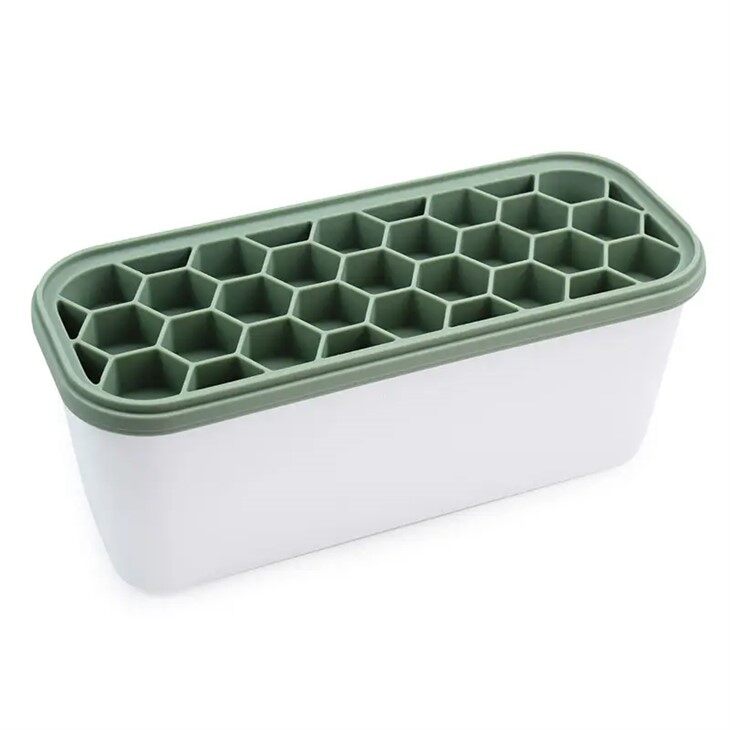
Deep single-cavity formats are difficult in rigid plastic, so they belong on the mold side of your range. Our silicone large ice cube tray is built in that format. Mini multi-cavity sheets are the opposite: they work in either material, and they are the format most often reordered by coffee shops and cafes.
Material and Food Contact
Food-grade silicone for freezer and dishwasher use, and food-grade PP or TPR for rigid parts, are the standard choices. Two things to settle before production:
- Temperature range. State the working range on the artwork and make sure it matches the material actually used. Most claims fail at the top of the range, not the bottom.
- Test reports. Ask for the report for the exact material batch, not a general certificate of compliance. Buyers in the EU will ask for migration testing; US buyers will ask for food-contact documentation.
If your range includes a lid, the lid material matters as much as the body. A rigid PP lid makes the product stackable; a soft silicone lid does not.
Sourcing Basics: MOQ, Samples and Tooling
Molds and trays both run at 500 to 1,000 pieces per SKU for a first order. Samples take three to five days, bulk takes 15 to 20 days, and anything custom is priced as its own line.
Tooling is the line item buyers forget. A new cavity profile or a new shape needs a mold, and that cost is paid once but quoted per project. Ask for the tooling cost, the lead time and who holds the tool before you compare unit prices between suppliers. A lower unit price with a tool owned by the factory is not a cheaper deal.
FAQ
Can one factory supply both molds and trays?
Yes, and it is usually better to buy both from one source so cavity sizes and lid fits are consistent across the range.
Is silicone always more expensive?
Per unit, yes. Per reorder, often not, because return rates from cracking and sticking are lower.
How many cavities should a first order cover? Two or three formats is enough to test: one large cube, one mini sheet, one special shape. Add depth after the first reorder.
Do I need tooling for my own shape?
Only if the cavity profile changes. Changing color or adding an embossed logo to an existing cavity does not require a new mold.
Bottom line
Stock trays for volume and molds for margin, and make sure your product pages use both words. The mold side is where your private-label customers live, and it is the side that justifies tooling, custom shapes and a higher retail price.
To see how the two formats are built across a full range, look at our ice cube tray collection or send the shape and cavity count you have in mind and we will quote the tooling with the unit price.