

A silicone ice cube mold is the format that makes deep cavities and unusual shapes practical. Because the cavity flexes, a cube comes out by pushing from the back instead of twisting the frame, so a 5 cm block, a sphere or a narrow-necked shape releases cleanly. The three variables that decide whether a mold works in the field are cavity size, wall thickness and whether there is a lid.
Key takeaways
- Wall thickness between 2 and 4 mm is the workable band: thin walls release easily but collapse when you carry a full mold, thick walls hold their shape but fight you at release time.
- Cavity size sets the retail price point more than cavity count does. A four-cavity large mold and a 128-cavity mini sheet cost similar amounts to make and sell at very different prices.
- A lid is not decoration. It stops freezer odors, prevents spills on the way to the freezer, and is what makes a flexible mold stackable.
- Buyers in the UK, Germany and much of the EU search for a silicone ice cube mould, using the British spelling. One mention of "mould" in the page copy costs nothing and catches that traffic.
What a Silicone Ice Cube Mold Changes
Three things change when the body is silicone instead of rigid plastic.
Release becomes a push, not a twist. That matters most on tall cubes. A 5 cm cube in a rigid tray needs a flexible frame or a two-part body; in silicone it just pops out.
Temperature tolerance widens. A food-grade silicone ice cube mold handles freezer storage, warm rinsing and the top rack of a dishwasher without clouding. Most complaints about cheap trays start with crazing or cracking after repeated cycles, and that failure mode mostly disappears in a silicone ice cube mold.
Stacking gets harder. A flexible body needs a lid or an outer frame to sit flat in a freezer. Any buyer comparing molds across suppliers should ask what the stacking plan is, because it changes carton quantity and shelf presentation.
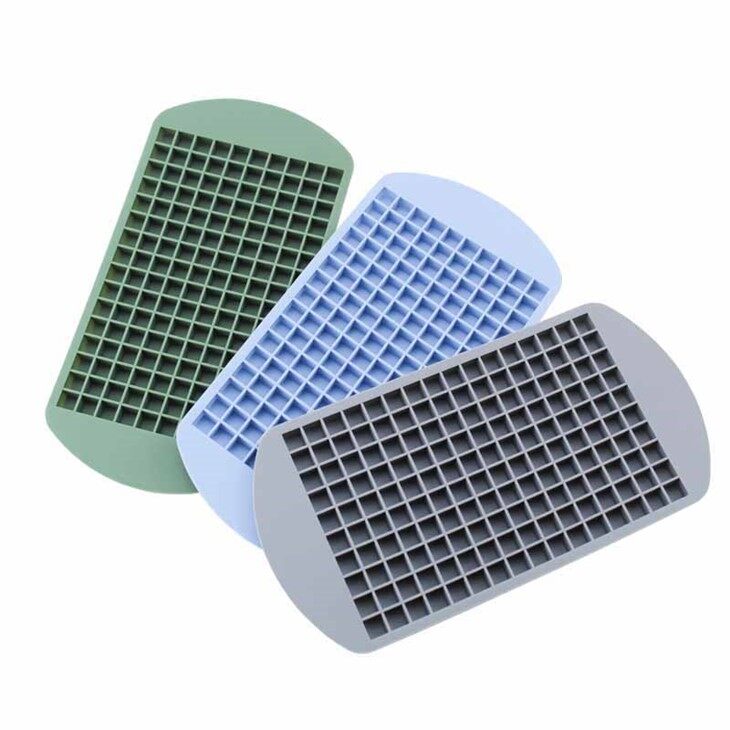
Cavity Sizes and Shapes
| Cavity | Cube size | Typical count | Where it sells |
|---|---|---|---|
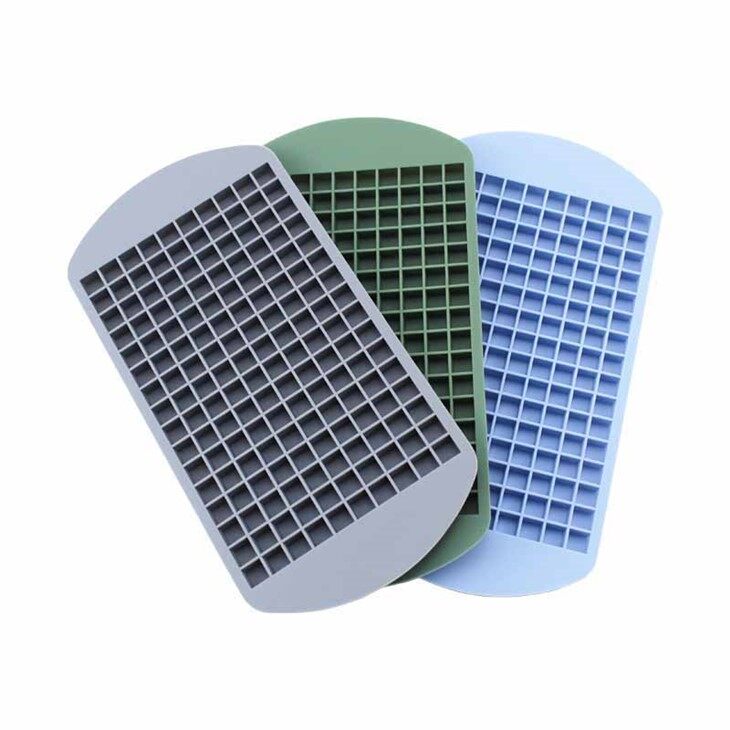
| Mini | 1 cm | 60-128 | Iced coffee, cold brew, baby food portions |
| Standard | 2.5-3 cm | 8-15 | General kitchen, cocktails |
| Large | 4-5 cm | 4-6 | Whisky, spirits, gift sets |
| Cylinder | 20-40 oz height | 2-4 | Insulated bottles, tumblers, sports bottles |
| Sphere | 4-6 cm | 4-6 | Barware, cocktail kits, whisky |
The pattern that repeats across markets: mini sheets reorder fastest from cafes and coffee shops, large cubes reorder from barware and gifting, and cylinders reorder from anyone selling drinkware accessories. A range that covers one format from each row gives a distributor something to sell in every channel.
Retail price tracks cavity size almost linearly. A 128-cavity mini sheet and a four-cavity large mold carry similar manufacturing cost and land at completely different price points, which is why large-format molds are usually the better margin item for a private-label range.
Lids: Three Options and When They Matter
A rigid PP lid turns a flexible mold into a stackable container and blocks freezer odors. It is the default for retail packs and for anything shipped as a set.
A soft silicone lid seals better against liquid but does not stack. It suits travel and camping packs where the mold goes in a bag.
A lid-plus-storage-bin format combines both: a flexible cavity sheet that drops into a rigid bin with a lid. It costs more to tool and sells at the top of the category, usually to buyers building a branded kitchen set rather than a single-item listing.
If the product is being sold as a gift, the lid matters more than the cavity. If it is being sold as a workhorse, buyers want the smallest number of parts that still stack.
Wall Thickness, Hardness and Release
Two specifications explain most field failures:
- Wall thickness. Under 2 mm the mold collapses when full and can tear at the cavity rim. Over 4 mm the cavity grips the cube and users go back to twisting. Ask for the wall thickness in millimetres, not a description.
- Shore hardness. Food-grade silicone for ice molds generally sits in the middle of the scale. Softer material releases more easily but distorts when carried full; harder material holds shape but needs more force to release.
Both numbers should be on the specification sheet. If a quotation does not state them, you cannot compare two suppliers on anything except price, and price alone will not tell you why one mold gets returns and the other does not.
Food Contact and Temperature Claims
Buyers in the EU will ask for migration testing on the finished article; US buyers will ask for food-contact documentation. Ask for the report covering the exact material batch you are buying rather than a general statement of compliance.
Temperature is the claim most often written loosely. State a working range and make sure the material meets it at both ends, especially the top, because that is where dishwasher and hot-rinse use lands. A mold rated only for cold use should say so on the artwork.
If the range includes a hard lid or frame, note the material separately. A silicone body with a PP lid has two sets of documentation requirements, not one.
Ordering: MOQ, Samples and Lead Time
A first order of a standard cavity profile sits between 500 and 1,000 pieces per SKU. Allow three to five days for samples and 15 to 20 days for the bulk run.
Before you compare quotations, get four things in writing: unit price at your order quantity, tooling cost and who owns the tool, wall thickness and hardness, and the packaging specification with carton dimensions. Suppliers who quote all four are usually the ones who can also make a second order match the first.
FAQ
Is a silicone mold dishwasher safe? Food-grade silicone on the top rack is normal use. Avoid the heated dry cycle and check the rated temperature first.
Why do my cubes taste like the freezer? The mold is not sealed. A lid, or storing cubes in an airtight container, solves it.
Can a mold be used for anything besides water? Yes. Juice, coffee, stock, purees and herb or oil mixes all freeze in the same cavities, which is why the mini formats sell into cafes and food preparation.
How many cavities should a first order include? Three formats is enough to test a channel: one mini sheet, one standard, one large or sphere.
Bottom line
Specify the cavity, the wall thickness and the lid before you discuss price. Those three decide whether the mold performs, and only after they are fixed does the unit price mean anything.
Our silicone ice cube tray range covers mini, large and round formats, and the 128-cavity ice cube tray is the format most often reordered by coffee buyers. If you are still deciding between a flexible mold and a rigid tray for a specific price point, the mold vs tray comparison works through that trade-off line by line.