

Soup Freezer Molds
Your Professional Soup Freezer Molds Supplier
Established in 2006, it is professional in manufacturing, and design sales of high-quality Houseware & Kitchenware products. The factory has a 20000square meter area and more than 300 staff Professional manufacturer engaged in the research, development,production,sale and service of silicone & plastic household items, baby products and gifts.


Why Choose Us
Service
We offer sample testing services. Customers can experience the samples in person after receiving them to ensure that the products meet their expectations before making a purchase.
Production Market
Our products have a wide market sales area, are exported to Europe, North America, Southeast Asia, and other regions, and have been favored by many overseas customers.
Our Certificate
Our products are widely used in Production certificate,BSCI,BPA Free,FDA 21 CFR.
Production Equipment
Our Injection Molding Machine,Liquid silicone rubber (LSR) injection molding machine,UV spraying line,dehumidifying dryer,Food-grade detector,High-gloss mold,leak detector and so on.
Key Design Features of Soup Freezer Molds
Variety of Shapes and Sizes
Silicone soup molds are available in an extensive range of shapes and sizes, from basic geometric forms like circles, squares, and rectangles to elaborate designs such as flowers, animals, holiday motifs, and even character-themed molds.
Flexibility and Softness
One of the most defining characteristics of silicone is its exceptional flexibility. Unlike rigid plastic or metal molds, silicone molds can be gently twisted, bent, or stretched to release delicate food items without damaging their structure.
Durability and Longevity
Silicone is a highly resilient material that maintains its integrity over repeated use. High-quality silicone soup molds resist tearing, warping, and degradation even after hundreds of cycles in ovens, freezers, and dishwashers. They do not become brittle with age or develop micro-cracks that harbor bacteria—a common issue with lower-grade plastics.
Non-Stick Surface
The inherent non-stick properties of food-grade silicone eliminate the need for greasing or oiling before use. Soups, especially gelatinous or sticky varieties, slide out effortlessly once set, preserving intricate details and maintaining a pristine appearance.
Ease of Cleaning
Clean-up is one of the biggest advantages of silicone soup molds. Most are dishwasher-safe, but they can also be easily hand-washed with warm soapy water. The non-porous surface resists staining and odor absorption, even after repeated use with strongly flavored ingredients like tomato, curry, or garlic-based soups.
Temperature Resistance
Silicone soup molds exhibit excellent thermal stability, typically withstanding temperatures from -40°C (-40°F) to over 230°C (450°F), depending on quality. This broad temperature range allows seamless transitions from freezer to boiling water or oven, making them suitable for both hot and cold applications.
Specification
|
Product name |
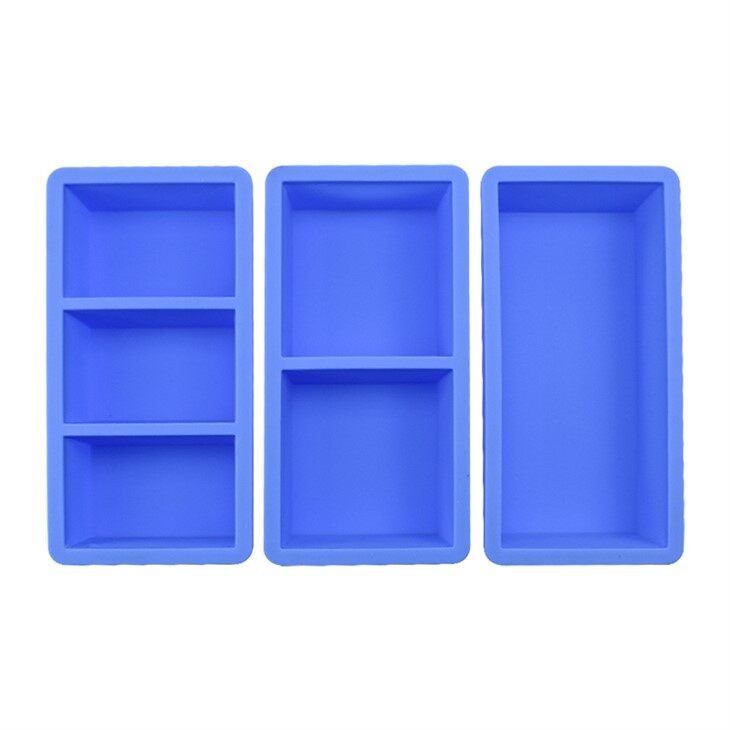
Custom LOGO Extra Large Soup 1 Cup Silicone Freezer Easy Release Molds Tray for Freeze Soup with Lid |
|
Usage |
Freezing & Baking |
|
Color |
Blue/Black/Pink/Green/Gray |
|
Meterial |
Slicone |
|
Logo |
Custom Logo |
|
Shape |
Square |
|
Function |
Silicone Ice Making Tray |
|
Size |
17*14.3*3.6cm |
|
Weight |
113g |
|
Packing |
1pc/opp Bag |
Practical Tips for Using Soup Freezer Molds
Prepare the Soup Properly
Before pouring the soup into the molds, make sure it has cooled down to a reasonable temperature. Hot soup can cause the silicone to warp or lose its shape. You can also strain the soup to remove any large chunks or solids that may prevent the soup from freezing evenly or make it difficult to remove from the mold.
Freeze the Soup Correctly
When freezing single - serving soups in silicone molds, place the molds on a flat surface in the freezer. This ensures that the soup freezes evenly and maintains its shape. You can cover the molds with plastic wrap or a lid to prevent freezer burn and keep the soup fresh.
Thaw the Soup Safely
To thaw the single - serving soup, you can transfer the frozen soup portion from the mold to a microwave - safe dish or a saucepan. Thaw it slowly in the refrigerator or use the defrost setting on your microwave. Avoid thawing the soup at room temperature for an extended period, as this can promote the growth of bacteria.

Application of Soup Freezer Molds
|
Sector |
Primary Use |
Key Benefits |
Recommended Mold Features |
|
Commercial Kitchens |
Portion control, plating, garnish prep |
Consistency, efficiency, visual appeal |
Reinforced rim, multiple shapes, stackable design |
|
Food Manufacturing |
Ready-to-eat product shaping |
Brand differentiation, consumer appeal |
Customizable shapes, scalable production molds |
|
Healthcare Facilities |
Nutritional meals for special diets |
Improved patient engagement, portion accuracy |
Easy-release surface, microwave-safe, dishwasher-safe |
|
Households |
Creative cooking, kid-friendly meals |
Fun, convenience, batch preparation |
Vibrant colors, fun shapes, compact storage |
1. Fill Tray
Put your food into the Souper Cubes tray, hot or cold!
2. Freeze It
Place the lid on top of the Souper Cubes tray and store it in the freezer.
3. Reheat
Pop your frozen food out! Reheat in the microwave, on the stove (in a pot), or in the oven - it's your choice!
FAQ
We're professional soup freezer molds manufacturers in China, specialized in providing high quality customized service. Please rest assured to wholesale soup freezer molds made in China here from our factory. Contact us for free sample.
3 Pcs Soup Freezer Molds, soup freezer molds, Soup Freezer Molds with Lid